Conversation
Start with the home, the problem you want to solve and the outcome that matters. Bring a postcode, useful photographs and any drawings or ideas you already have.

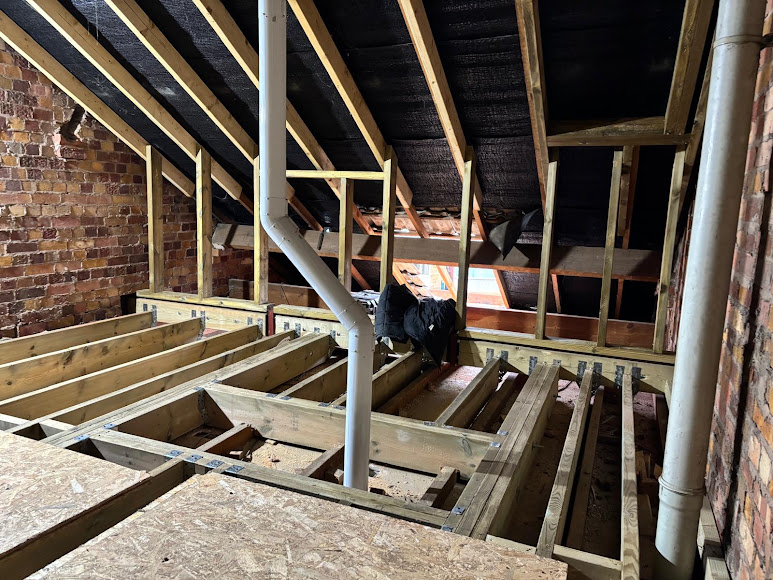
How a project moves
Understand the questions, information and decisions that help residential building work move forward clearly.
Five stages
The exact route varies by project. These five stages give the conversation a useful structure without pretending every home follows an identical programme.
Start with the home, the problem you want to solve and the outcome that matters. Bring a postcode, useful photographs and any drawings or ideas you already have.
The proposal may need design, structural or approval input before the work can be properly defined. The right route depends on the property and project.
A meaningful quotation relies on an understood scope. Review what is included, what information it is based on and which decisions are still open.
The work moves through practical stages. Access, household arrangements and important decisions should be discussed in relation to the real project.
Final details are checked and the completed space is handed back. Any project-specific completion arrangements should be agreed as part of the scope.
Prepare well
You do not need a finished specification. A few practical details make it easier to understand the likely next step.
Before building begins
Residential work becomes difficult when assumptions are left unspoken. The property, proposed work, available information and open decisions all affect what can be priced and planned.
Use the quotation conversation to check what is included and what still depends on design, selections, approvals or site conditions.
Ask about your projectStart a conversation
Share the basics now. If more information is needed before a useful next step, that can be identified early.